After a lengthy amount of time off, I figure it's about time to get back into the process of rounding out this tournament. Sixty four teams entered, and now only 8 remain. If you were to give me the 8 best teams of all time, I'm sure a lot of these squads would make it, but probably not all of them. But each of these teams has survived a virtual onslaught from other NBA champions (granted, some slates tougher than others) to get to this point, and to be the Champion of Champions, you have to get through three more titans. It's no small feat.
So for today, we move on to the quarterfinals. I'm doing all the series here, but not announcing best players or anything until we get to the end. At that point I'll name an All-Tournament Team or two (or maybe even three, we'll see). For now, it's just simulations. As in the first three rounds, these series are best of seven (2-2-1-1-1 format), with home court going to the team with the better overall record (regular season plus playoffs). All simulations are provided by WhatIfSports.com. You can click on the tag below for "Tournament of Champions" to see every other post about the tournament to date. For now, let's move on to the quarters.
The (mostly) sane rantings of a broadcasting graduate working in sports.
Thursday, August 22, 2013
Thursday, August 15, 2013
Wait, It's the 21st Century?
I was glancing at Twitter on my way up from grabbing lunch when I saw a Sportscenter headline pop up that made me happy. It's been a long time coming.
I put together a list of things I wanted to improve in baseball last year, but looking back I've continued to realize that it was far from complete. I've addressed umpire incompetence a couple times on this forum, so I'm all for replay. The only caveat is, I want it to be done right. Hopefully the owners want it done right as well and make sure that this system can be implemented in a way to help the game.
In a way, I kind of wanted a challenge system as long as it was done well, so I was a little leery when I initially heard that each manager would be given three challenges a game. Then I learned the conditions and that you only get one in the first six innings of a game, and then two for the remainder of the game. Ultimately, I think this will work. It limits stoppages early and allows for greater weight to be placed towards the end of games. Every out of a game is technically worth the same, but later situations are under much more scrutiny. Such is the nature of sports.
The limit also keeps us from overanalyzing every play. Despite Angel Hernandez's best efforts, I still believe that umpires make the correct call far more often than not. The issue I have with them more so lies in their lack of accountability (or so we seem to perceive,since umpires face consequences; we just don't know what they are) than the fact that they make mistakes. They're human. It happens. We just want it to happen less, and when it does happen, for them to drop the aura of self-righteousness. With the new plan, we can hopefully get rid of some of these mistakes and thus cut down on some of the appearances of umpires making spectacles of themselves.
Ultimately though, there's going to be one or two loud opposing arguments. One of them will be from the purists who claim that replay would "remove the human element from the game", an argument that really doesn't make any sense. Keeping a tradition around just for the sake of tradition may seem noble, but when so many stories about baseball revolve around controversial calls (when we're not talking steroids), you know it's not a good tradition. That said, I'm fine with umpires continuing to call balls and strikes. I don't mind the slight differences in strikes, as long as it's not ridiculous (giving a couple inches outside the standard zone is fine, but calling a strike on a pitch a foot outside is insane). It's rare that ball and strike calls by an umpire have a huge impact as compared to calls in the field.
The only complaints that might come louder would be from fans who don't want the game slowed down any more than it already is. While I get that, replays don't take as long to do as people think. When managers come out to argue, we end up seeing replays on TV anyway. Why not make it productive? In the other major sports, replay reviews more often than not don't take very long to do, so the time additions wouldn't be much of a factor. More time issues arise from batters stepping out of the box after every pitch or pitchers taking forever between pitches. Changes in rules there would probably more than make up for any time lost for reviews. How many games are going need more than one anyway? Probably not many.
Obviously, the specifics need to be carefully reviewed before a final decision is reached by the 30 clubs. But the specifics we have so far all look pretty good in theory. It's 2013. It's time for Major League Baseball to start acting like it.
I put together a list of things I wanted to improve in baseball last year, but looking back I've continued to realize that it was far from complete. I've addressed umpire incompetence a couple times on this forum, so I'm all for replay. The only caveat is, I want it to be done right. Hopefully the owners want it done right as well and make sure that this system can be implemented in a way to help the game.
In a way, I kind of wanted a challenge system as long as it was done well, so I was a little leery when I initially heard that each manager would be given three challenges a game. Then I learned the conditions and that you only get one in the first six innings of a game, and then two for the remainder of the game. Ultimately, I think this will work. It limits stoppages early and allows for greater weight to be placed towards the end of games. Every out of a game is technically worth the same, but later situations are under much more scrutiny. Such is the nature of sports.
![]() |
| AP Photo/ Mark Duncan |
Ultimately though, there's going to be one or two loud opposing arguments. One of them will be from the purists who claim that replay would "remove the human element from the game", an argument that really doesn't make any sense. Keeping a tradition around just for the sake of tradition may seem noble, but when so many stories about baseball revolve around controversial calls (when we're not talking steroids), you know it's not a good tradition. That said, I'm fine with umpires continuing to call balls and strikes. I don't mind the slight differences in strikes, as long as it's not ridiculous (giving a couple inches outside the standard zone is fine, but calling a strike on a pitch a foot outside is insane). It's rare that ball and strike calls by an umpire have a huge impact as compared to calls in the field.
The only complaints that might come louder would be from fans who don't want the game slowed down any more than it already is. While I get that, replays don't take as long to do as people think. When managers come out to argue, we end up seeing replays on TV anyway. Why not make it productive? In the other major sports, replay reviews more often than not don't take very long to do, so the time additions wouldn't be much of a factor. More time issues arise from batters stepping out of the box after every pitch or pitchers taking forever between pitches. Changes in rules there would probably more than make up for any time lost for reviews. How many games are going need more than one anyway? Probably not many.Obviously, the specifics need to be carefully reviewed before a final decision is reached by the 30 clubs. But the specifics we have so far all look pretty good in theory. It's 2013. It's time for Major League Baseball to start acting like it.
Thursday, August 8, 2013
NBA Tournament of Champions: Bob Cousy Bracket Finals
What a ride the NBA Tournament of Champions has been thus far. Sixty four teams entered, and right now only nine are left standing, but one more must fall before the end of the week. The Cooz couldn't get any of his teams to move onto this stage, but his franchise did get an incarnation this far in his bracket. However, they have an incredibly tough task ahead. Can they knock off arguably the best team ever assembled? There's only one way to find out.
As the prior 47 series have been, this is a best of seven (2-2-1-1-1 format), with home court going to the team with the better overall record (regular season plus playoffs). All simulations are provided by WhatIfSports.com. To see how we got here, you can click on the links for first and second round results. Let's round this out.
Wednesday, August 7, 2013
NBA Tournament of Champions: Magic Johnson Bracket Finals
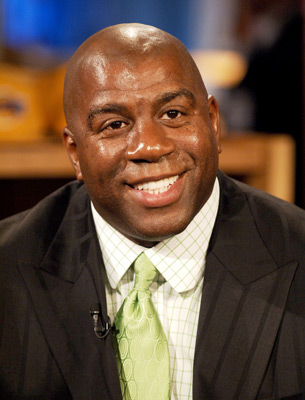
Magic Johnson was able to get one of his championship teams through out of the bracket stage already, but in his namesake bracket, he got bumped a couple weeks ago. In his place in the finals of this bracket are a pair of juggernauts that have gone 8-1 through the first two rounds. And somewhere, maybe the leader of one of these juggernauts is shrugging at Magic again. Ultimately one question ensures with this matchup: will the dirty little secret of one of the greatest dynasties in NBA history be exposed for all to see? We're about to find out.
As a refresher, this series, like all the preceding ones, is a best of seven (2-2-1-1-1 format) with home court advantage going to the team with the better overall record (regular season plus playoffs). All simulations are provided by WhatIfSports.com. You can view the first and second round results at the links provided. Let's play ball.
Tuesday, August 6, 2013
NBA Tournament of Champions: George Mikan Bracket Finals
In some ways I feel bad for poor George Mikan. He was the dominant force in the NBA in the early 50's until the league changed things around, then was commissioner of the ABA and botched a chance to bring Kareem into his league's fold. Even so, there's still the drill named after him that all aspiring big men should practice often, so I guess it's not all bad. Unfortunately for him though, all his title teams were promptly wiped aside in the opening rounds of the Tournament of Champions. Heck, of his three title teams in this bracket, only one managed to avoid a sweep! Instead, we get a battle between a power of the late 80's and their Eastern Conference foil that would overtake them a couple years later and give birth to the last great NBA dynasty.
So to decide which of this archrivals gets to advance in the tournament, we stick to the best of seven series (2-2-1-1-1 format), with home court going to the team with the better overall record (regular season plus playoffs). All simulations are provided by WhatIfSports.com. You can see results from the first and second round at the provided links. Now, let's play some (simulated) basketball.
Monday, August 5, 2013
NBA Tournament of Champions: Tim Duncan Bracket Finals
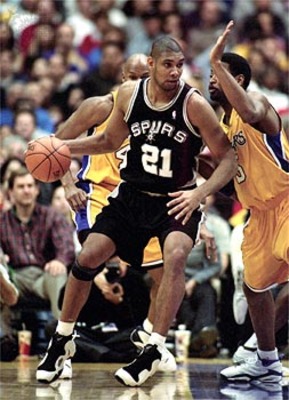
Looking at each of the eight brackets in this tournament, this one had a lot of recent title teams, and it just kind of happened that way since I built the tournament with a random number generator. Ultimately though, we come down to a couple of recent champions from Texas to fight for the right to advance to the final eight. Two of the best forwards of this generation lead the way. Who will win?
To find out, we're doing a best of seven series (2-2-1-1-1 format), with home court going to the team with the better overall record (regular season plus playoffs). All simulations are provided by WhatIfSports.com. If you want to refer back to how these Texas giants got here, first and second round results are at the corresponding links. Let's get this party started.
Thursday, August 1, 2013
NBA Tournament of Champions: Bill Russell Bracket Finals
A common thread throughout two of the three brackets we've gone through so far this round: their namesake isn't playing in the Final. Bill Russell makes it three of four, since he saw one of his teams knocked out last round, but it does set up a battle of titans led by legendary centers.
The format of this battle remains the same as before: this series will be a best of seven (2-2-1-1-1 format) with home court going to the team with the better overall record (regular season plus playoffs). All simulations are provided by WhatIfSports.com. You can click on the corresponding links for first and second round results from this bracket. Onward to the main event.
Subscribe to:
Posts (Atom)


