Wednesday, November 11, 2015

Public Address Announcing and the Misguided Notions of Sportsmanship

A couple notes before I get too involved in this. This is a topic I've been intending to write a post about for several months now. It's a bit of an old story, but by the time I found out that these rules in question were brought up, they were already in effect, so I decided to wait until the approach of this season to actually write my thoughts.

A more important warning: this post may get a little charged. I will get up on my soapbox a little bit today, because I feel strongly about some of these things. I'd also like to note that all thoughts below, unless otherwise expressly stated, are my own and do not necessarily reflect the views of my employers.

Very early on during my time writing Confessions of a Sportscaster, I did a little introductory post on the concept of public address. By and large, I stand by my every statement made four years ago in that post. As I've gotten more experience, there are some things that may need to be adjusted with it, but the spirit of it remains the same and probably always will.

Last season at North Central, I would take a fair number of pregame pictures for Facebook and Twitter as a general "Go Cardinals, beat [opponent]!" post. There was one where I made the comment about yelling "THREEEEEEEEEEE!" a lot. My aunt in North Dakota told me about rules there saying that announcers couldn't comment on any points or fouls. I expressed the sentiment that this was dumb. Turns out, it's not North Dakota's fault.

Somewhere later along the line, I found a blog post by Jarrod Wronski, an announcer and official from the Washington, DC area talking about rule changes instituted by the National Federation of State High School Associations. State associations like the IHSA end up falling in line with what the NFHS says, and apparently North Dakota did the same.

Wronski made some valuable points, and there is one I especially want to echo. Public address announcing is not play-by-play. I have done both. They are not remotely the same. Anyone who does play-by-play in a public address setting needs to be removed from the mic until they learn the difference.

That said, I did find the official memo from the NFHS regarding announcer responsibilities for basketball. Their list of things that may be announced is all spot on, but many things they restrict are either ambiguous or stupid. Here are some of their restricted things:
  • Number of points a player scored (Fair, since that takes time and isn't super important to do your job. During halftime, this should be okay.)
  • Number of fouls on a player (Dumb. A good announcer knows how to keep track of these things, and it provides a valuable service not only to the fans, but to the teams as well. I also double check on foul counts with the official scorer as games go on, so I make sure I have the right information. Any competent announcer would do the same.)
  • Number of team fouls (Again, dumb. This information is on the scoreboard and can easily be confirmed with the official scorer, and is also valuable for the teams and fans.)
  • Number of time outs remaining (Kind of dumb. I typically don't announce time outs remaining, but it can be valuable considering that coaches constantly come to the table to confirm how many they have left.)
  • Time remaining in a quarter/game (Depends on the circumstance. I typically announce where there's either one or two minutes left in the half, primarily as a courtesy to the teams. This actually drew the ire of someone who works for the CCIW at one point last season, who told me that it's against the rules even though in college, it isn't. At the next home game, he came up to me before the game and reminded me. I asked him where the rule was, and he said it was a rule. I did it anyway with the backing of NCC's athletic administration, and it wasn't brought up again. Anyway, as long as you limit it to one situation a half like that, it's fine.)
  • Type of foul or violation (I'm not a huge fan of this rule, partially because it's so broad. I don't announce the exact foul call, i.e. reach, push, body, etc. For actual turnover violations, I do. In the grand scheme of things, there's no difference between a travel, three second call, or any other violation, but for people unfamiliar with officials' signals or who missed exactly what happened, it's important.)
  • Emphatic 2 or 3 point field goal (Wholeheartedly disagree because I am a homer. There's some logistical reasons too, mainly in the event that it's a close call and the officials are signaling more than normal to the table where I want to make sure I clarify it correctly. But mostly I wholeheartedly disagree because I am a homer.)
From there, they make a list of responsibilities for the announcer. Weirdly, they prohibit announcements "while the ball is live", which is incredibly ambiguous and by the letter of the law, wouldn't allow announcements of scoring players until a timeout. On a less ambiguous note, this is especially important with free throws, and I feel it's important not to talk over a player going into their shooting motion (I have done this on accident a couple times, and I always feel bad when I do, for either side).

On the whole though, this regulation makes the job incredibly difficult, especially in a fast-paced game like the North Central women play all the time. It just wouldn't work. I also echo Wronski's point that it makes the announcer sound like an amateur. Now, the NFHS also recommends announcers be trained and that officials instruct announcers pre-game. It gets everyone on the same page, and makes sure that the announcer is competent.

Now, here's the general point that gets me upset.
"The announcer’s role does not include 'cheering the home team on' or otherwise
inciting the crowd. Doing so is common at other levels of athletic events. But high
school athletics is different because sports are educationally based."
I'll touch on the "education" aspect in a second. For me, I'm not 100 percent sure what the meaning of this is. If they are talking about announcers leading chants, I wholeheartedly agree. That's not the role of a public address announcer, and if you need to use your announcer to get fans into the game, something is wrong. Now, if you're going beyond that scope and trying to legislate inflection and enthusiasm, that's where I have a problem.

The main issue I have is that I fail to see how showing excitement for the home team as an announcer diminishes education. To me (and some coaches I have talked to), this rule on the whole is hiding political correctness behind the guise of "education". NCAA Division III basketball is about love of the game, but the student-athletes at this level are truly students first and athletes second. Yet the NCAA does not limit "cheering the home team on" except during the NCAA Tournament, which makes perfect sense. If it's not a problem in college when academics are prioritized, why is it an issue in high school? I think it's more about not hurting players' feelings than "education".

I talked with another coach recently about this sort of issue. Part of the draw of analysts to road wins is just that: road games are supposed to be hard. I don't advocate hostility, but home crowds should be loud and supportive of their teams. Then when you get back home, you get that same benefit. An announcer can be a part of that. I can help build the atmosphere around a game and rally support for the home team. That doesn't make me unprofessional. It makes me passionate about my team. As long as you are respectful of the visiting team, the officials, and fans, it does not make you a poor sport.

Let's go back to 1996 because I love this.


Ray Clay is one of the main reasons why I keep coming back to the microphone every winter. I remain convinced that he was worth 10 points before every game at the United Center during the apex Jordan years. It's clear he's "cheering the home team on", and doing so while not disrespecting the Sonics. While, granted, this is the NBA and thus not "educationally based", it shows that there's nothing wrong with being a bit of a homer. I stand by the aforementioned limits: be respectful of the everyone, don't lead the crowd in chants, and don't step on any plays. If you follow those rules, prepare yourself before every game, and know how the sport as a whole operates, you're going to be fine whether you're the most neutral announcer ever or a blatant homer.

Things like these asinine rule changes make me glad I left high school announcing when I did, even though it had nothing to do with announcing rule changes. I would not be able to follow my calling doing games at Aurora Christian now. Instead, I'm in the perfect system for my passions with a school that appreciates the work, an administration whose main concern is making sure I don't destroy my vocal cords too early in a game or season, but most importantly, a head coach and team that love the job I do and the support that I bring them on the mic several nights a year.

If the day comes where I work an NCAA Tournament game, I will be neutral. That is the NCAA rule, and I respect it. Until that day comes, however, I will continue to yell "THREEEEEEEEE!" at the top of my lungs, and I refuse to apologize for it.

Tuesday, November 10, 2015

2015 NCAA NCSS Rankings: Week 11

Another mock bracket is out and our Week 10 look is concluded. Week 11 gets underway tonight with some MACtion, so we need to be ready with a look at the schedule.

Last week saw a little flipping between conferences, but it's interesting to see the clear dividing line: the Group of Five all make up the top five in these rankings, while the Power Five conferences rank 6-10, and pretty much have for all but the entire season. Since we're mostly doing in-conference games for the rest of the year, most of the ranking will remain the same, at least for the next week or so until Nick Saban and other SEC shills show how big of cowards they are.

After the jump, I will show this week's average NCSS score as well as their cumulative total. Let's take a look.

Monday, November 9, 2015

2015 Death to the BCS Playoffs: Week 10 Mock Bracket

Last week was the easy bracket. This week, it gets harder.

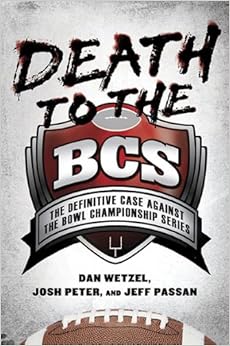
We lost enough undefeated teams that at the same as the College Football Playoff got to begin discussions, my committee of one got to start looking at setting up the playoff system proposed by Wetzel, Peter and Passan. If you need a refresher, this is a 16-team playoff bracket including the ten conference champions and filled in with six at large teams. These teams are then seeded 1-16, with home court advantage going to the higher seeds in the first three rounds.

So to determine the at large teams and the seedings, I use my NCSS rankings and Playoff Points rankings, the full information for which can be found on my Google Sheet. I then also add in consideration from a pair of computer rankings that include margin of victory: one by Jeff Sagarin, who used to do one of the computer rankings for the BCS, but his BCS one did not consider margin of victory because of "sportsmanship", or so the Cartel claimed; and one by the late David Rothman as compiled by a UCLA faculty member. These factors will combine somewhat organically to form the bracket. So after much self-deliberation, here's what we're looking at for this week's mock.

2015 NCAA Playoff Points: Week 10

The results are in, and several undefeated teams are out of the mix.

We're down to just six undefeated teams ten weeks in, which means a bunch of teams will now be in the mix for the Death to the BCS Playoffs. That comes a little later today. For now, I need to update results from the weekend as it pertains to Playoff Points, which saw some fairly significant changes from last week.

So below, I will go conference by conference with a look at their average wins and Playoff Points, both First and Second Degree. I'll also take a quick look at some of the national leaders in advance of preparing my second mock bracket. If you need a refresher on how Playoff Points work, you can refer back to my Week 1 post.


Thursday, November 5, 2015

2015 COAS Pigskin Pick 'Em: Week 9

Things are evening out a bit, at least on a one-week basis amongst the coalition as we reach the halfway point of the season.

With eight weeks in the books, Adam is still firmly in the lead amongst our little group, though I'm kind of hanging around, and we have to remember that I had a bigger lead a little later in the season last year that I nearly blew, only to hang on by the slimmest of margins in Week 17. I'm hoping I can complete a similar comeback in the second half.

I didn't do myself any favors last week, as Adam got the back door cover on Monday night to take four of the seven disputed games. Money line-wise, Adam is up about $350 on the year, while I'm failing miserably, down almost $1500. Good thing I only laid down $20 on two Week 1 games while in Vegas and the rest of this is all hypothetical...

We had a rare moment of groupthink this week, and actually, one of the best examples we've seen yet. Adam and I disagree on just two games this week, which is a season low and might be a low in our 26 weeks doing this. Here are our thoughts for Week 9.

Tuesday, November 3, 2015

2015 NCAA NCSS Rankings: Week 10

With our first mock bracket out, the debate over playoff resumes can truly begin. Of course, as we continue on with the season though, we need to continue to gather data to make informed decisions.

For the last several weeks, there has been a minimal amount of change in these rankings with the conferences just because of the sheer amount of in-conference play. Last week was no exception. This week will see more of the same by nature.

I do this post on Tuesdays mainly because of MACtion, which kicks off today with NIU and Toledo. This covers everyone

Following the jump, I will post this week's score and the cumulative score for the season. I'll also check in on last week's ranking. Let's take a look.

Monday, November 2, 2015

2015 Death to the BCS Playoffs: Week 9 Mock Bracket

Now we get to the fun part.

There are currently 11 undefeated teams left in the Football Bowl Subdivision, and at this stage, that is enough to finally start putting together a mock bracket for the Death to the BCS Playoffs.

If you are a regular reader of Confessions of a Sportscaster, you know that I have a disdain for the elitism rampant in big time college football (so much so that it is the topic of my final project in my master's class this fall). Even the College Football Playoff isn't good enough. It's a good start... but we need more. You can't have a true national champion if everyone doesn't have a chance to compete for it. That is why for years I have advocated for the playoff format laid out by Dan Wetzel, Josh Peter and Jeff Passan in their 2010 book Death to the BCS.

The system is simple: 16 teams. The 10 conference champions get automatic bids into the playoffs, while the rest of the field is filled in with at-large teams. These teams are seeded 1-16, and home field advantage goes to the higher seeds for the first three rounds, incentivizing the regular season. The title game, after I've moved it around a little bit, in a recent re-reading of the book reminded me of the true location of the title game: Pasadena, in the Rose Bowl. How could it be anywhere else?

Now, how do I fill out the field and seed everyone? To decide on this, I use a little bit of the eye test, but I also have a few metrics to help me out. I start with taking a look at the NCSS scores that I've been compiling since Week 1. While imperfect, this helps read into how much of a challenge teams are taking with their non-conference schedule. To get a good look at resumes, I also grab a glance at First and Second Degree Playoff Points, which I have been compiling as well since Week 1. This helps determine the differences between teams with similar records and how good their vanquished foes are. All of these scores can be found on my Google Sheet.

To balance out any potential biases I may have, I then also use a pair of computer rankings that take margin of victory into account, because a narrow win and a 30 points win mean different things. Jeff Sagarin did one of the old BCS computer rankings, but I take his ranking that includes margin of victory instead of his old BCS one that did not. His "rating" is the one that is used for Death to the BCS purposes. Also, the late David Rothman did computer rankings on his own, but was not allowed to use it for the BCS because, again, it included margin of victory. Before he died, he made his formula public, and a UCLA faculty member computes the rankings using that formula.

These factors will be combined somewhat organically to produce the 16 team field. Here is our first one of the season.